

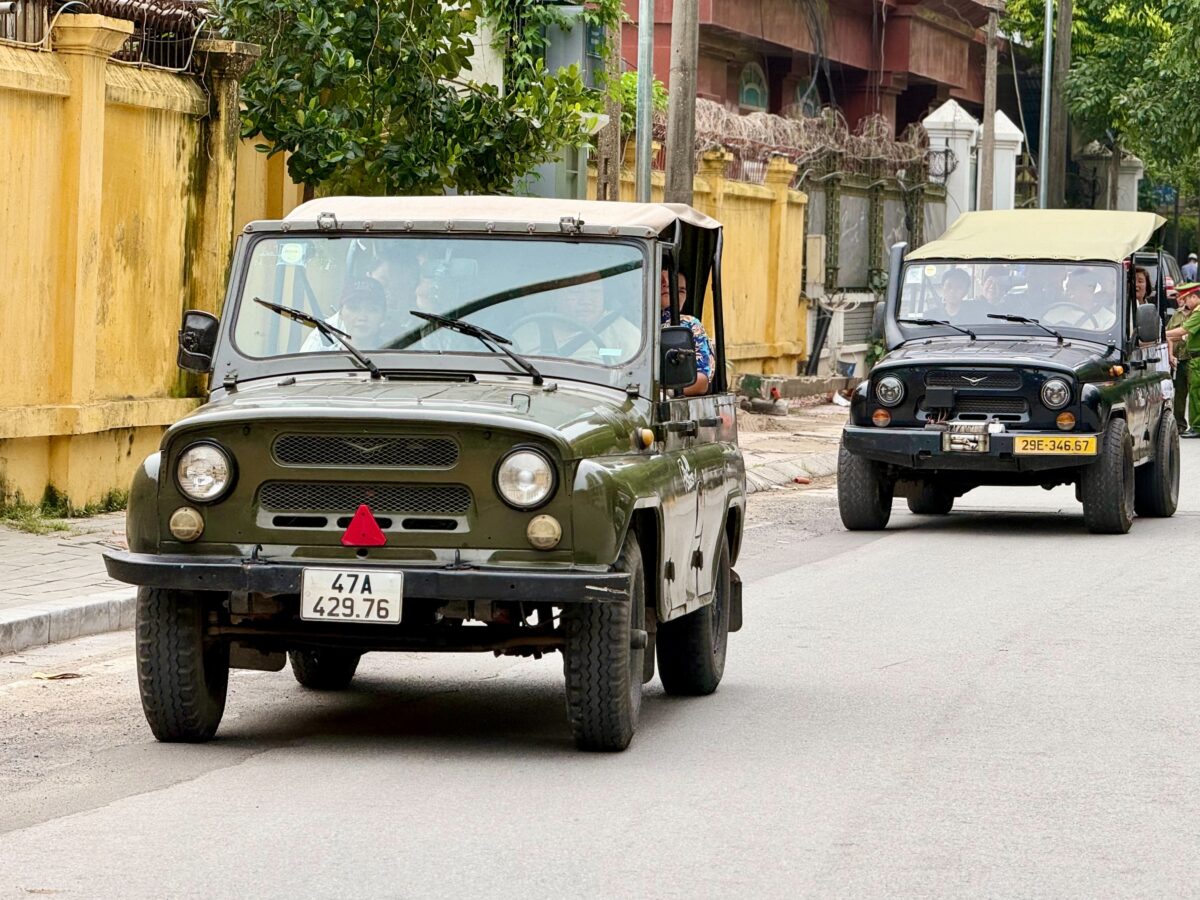
Hanoi Jeep Tour for First-Time Visitors to Vietnam
For travelers visiting Vietnam for the first time, Hanoi can feel overwhelming in the best possible way.
The streets are busy, motorbikes move in every direction, traditional houses stand beside French colonial buildings, street vendors prepare food on sidewalks, cafés occupy tiny spaces, and modern life continues around centuries-old temples.
You may want to see everything: the Old Quarter, Hoan Kiem Lake, Hanoi Opera House, Ho Chi Minh Mausoleum, Train Street, Long Bien Bridge, West Lake, local markets, Vietnamese food, and the quieter neighborhoods beyond the main tourist streets.
The challenge is doing all of that without spending your entire first day trying to understand Hanoi’s traffic and geography.
This is where a Hanoi Jeep Tour can be especially useful for first-time visitors.
An open-air Jeep gives you a broad introduction to the capital while a professional guide explains what you are seeing. Current Hanoi Jeep routes combine major landmarks with hidden streets, markets, lakes, the Red River, Banana Island, Train Street, and food or coffee stops.
Why Hanoi Can Be Overwhelming for First-Time Visitors
Hanoi is not a city that reveals itself immediately.
The Old Quarter alone contains dozens of historic streets, each with its own atmosphere and history. The tourist center is relatively compact, but once you travel toward Ba Dinh, West Lake, Long Bien, or the Red River, the city becomes much larger.
The Old Quarter’s historic streets were traditionally associated with different trades, and many still retain traces of their original commercial identity.
For a first-time visitor, trying to connect all these places independently can take time.
A Jeep Tour gives you an overview first.
Your First Introduction to Hanoi
A good first-day experience should answer some basic questions.
Where is the historic center?
Where is the French Quarter?
Where are the main political landmarks?
Where does the Old Quarter end?
Where is West Lake?
How does the Red River fit into the city?
Where do people eat?
Which neighborhoods are tourist-oriented, and which feel more residential?
A Jeep Tour can connect these different areas within several hours.
Instead of learning Hanoi one neighborhood at a time, you begin to understand the city’s overall geography.
Start in the Old Quarter
The Old Quarter is one of the most important places for first-time visitors.
It is Hanoi’s historic commercial heart, with narrow streets, traditional architecture, shops, cafés, restaurants, temples, and street food.
Current Hanoi guides describe the Old Quarter as a dense area of historic guild streets, hidden cafés, traditional shops, temples, and food stalls.
A Jeep gives you a comfortable introduction before you decide which streets you want to explore more deeply on foot.
Hoan Kiem Lake: The Center of Hanoi
Hoan Kiem Lake is another essential first stop.
It is closely connected with Hanoi’s identity and provides an easy reference point for understanding the city center.
The surrounding area leads naturally toward the Old Quarter, French Quarter, shopping streets, cafés, restaurants, and cultural attractions.
For first-time visitors, seeing the lake early in the trip helps establish a mental map of Hanoi.
Discover the 36 Streets
You will probably hear the expression “36 Streets” during your Hanoi visit.
The Old Quarter historically developed around guilds and specialized trades, with street names reflecting the products once sold there.
Hang Bac was traditionally associated with silver.
Hang Gai became known for silk.
Hang Ma remains associated with paper offerings and decorations.
These names provide clues to Hanoi’s commercial history.
You do not need to memorize all 36 streets.
The important thing is understanding that the Old Quarter is not simply a collection of narrow roads.
It is a living historical district.
Why the Jeep Is Useful Here
The Old Quarter itself is excellent for walking.
In fact, walking is one of the best ways to explore its narrow lanes in detail. Current Hanoi walking guides describe the tourist core as compact and highly walkable.
But a Jeep offers something different.
It allows you to explore the Old Quarter and then continue much farther.
That is particularly useful if you have only a short time in Hanoi.
See the French Quarter
After the dense Old Quarter, the French Quarter creates an immediate contrast.
The streets become wider.
Buildings become more formal.
French colonial architecture appears alongside modern Hanoi.
The Hanoi Opera House is one of the most recognizable landmarks in this part of the city.
For first-time visitors, seeing the Old Quarter and French Quarter during the same journey makes Hanoi’s architectural contrasts much easier to understand.
Continue Toward Ba Dinh
Ba Dinh introduces another important chapter of Hanoi.
The area around the Ho Chi Minh Mausoleum, Presidential Palace, Ba Dinh Square, and Hanoi Flag Tower is closely connected with Vietnam’s modern national history.
A Jeep Tour can pass through this area while your guide explains the significance of the landmarks.
Current Hanoi Jeep routes include the Ho Chi Minh Mausoleum complex, Presidential Palace, Hanoi Flag Tower, French-style buildings, and other historic sites.
Visit Huu Tiep Lake
Huu Tiep Lake offers a very different experience from the major monuments.
The remains of a B-52 aircraft can be seen in the lake, surrounded by an ordinary residential neighborhood.
For a first-time visitor, this creates an important realization:
Hanoi’s history is not confined to museums.
It can appear in the middle of everyday neighborhoods.
Current Jeep routes include Huu Tiep Lake and the B-52 wreckage as part of their city exploration.
Experience Hanoi’s Residential Streets
One of the biggest advantages of a guided Jeep Tour is getting beyond the main tourist roads.
Residential alleys reveal another side of Hanoi.
You may see small family businesses, neighborhood cafés, homes, markets, repair shops, street vendors, and people going about their normal routines.
These streets may not appear on a standard first-time sightseeing checklist.
But they help explain what Hanoi is actually like.
Long Bien Bridge
Long Bien Bridge is one of the most recognizable structures in Hanoi.
Crossing it provides views toward the Red River and the rapidly changing landscape around the city.
For first-time visitors, it is particularly valuable because it demonstrates how Hanoi extends beyond the historic center.
You move from dense urban streets toward the river and agricultural areas.
Current Hanoi Jeep routes include Long Bien Bridge as a major part of the city’s historical and scenic itinerary.
See the Red River
The Red River is fundamental to understanding Hanoi’s geography.
The city did not develop independently of the river.
It grew around it.
Today, the river creates a remarkable contrast between central Hanoi and the greener landscapes on its edges.
A Jeep Tour allows first-time visitors to see this transition rather than only seeing Hanoi from the center.
Discover Banana Island
Banana Island can be one of the biggest surprises for someone visiting Hanoi for the first time.
Only a short distance from the dense city center, the landscape can become surprisingly green and agricultural.
You may see gardens, farmland, narrow paths, banana trees, and a much quieter environment.
Current Jeep itineraries include Banana Island as a countryside-style section of the Hanoi experience.
This is one of those places that changes your understanding of Hanoi.
The capital is not only buildings and traffic.
West Lake
West Lake introduces another side of Hanoi.
The lake is surrounded by cafés, restaurants, residential streets, temples, and modern businesses.
The atmosphere is generally more spacious than the Old Quarter.
For first-time visitors, West Lake provides a useful comparison with the historic center.
You can see how Hanoi has expanded and developed modern neighborhoods while retaining its traditional character.
Tran Quoc Pagoda
Tran Quoc Pagoda sits beside West Lake and is one of Hanoi’s best-known Buddhist sites.
Its lakeside setting makes it especially photogenic.
For first-time visitors, the combination of West Lake and Tran Quoc Pagoda provides an introduction to Hanoi’s spiritual and architectural traditions.
Current Jeep routes include Tran Quoc Pagoda and the West Lake area.
Train Street
Train Street is one of Hanoi’s most recognizable modern attractions.
The railway passes through an extremely narrow residential environment where homes, businesses, cafés, and railway infrastructure exist in close proximity.
The experience is unusual, but visitors should follow current access rules and the instructions of guides and authorities.
Current Hanoi Jeep itineraries include Train Street as one of their signature stops.
Don’t Make Train Street Your Whole Hanoi Experience
First-time visitors sometimes become so focused on Train Street that they miss everything around it.
The railway is interesting.
But the surrounding neighborhoods are even more useful for understanding Hanoi.
A Jeep Tour places Train Street within a larger journey that includes history, food, architecture, markets, lakes, bridges, and residential areas.
That creates a much more complete first impression.
Taste Vietnamese Food
You cannot properly experience Hanoi without trying its food.
For first-time visitors, a Jeep Tour can make the process easier because your guide can introduce dishes and explain how they are normally eaten.
Depending on the itinerary, you may encounter dishes such as:
Phở — rice noodles in a fragrant broth.
Bún chả — grilled pork, rice vermicelli, herbs, and dipping sauce.
Bánh cuốn — delicate steamed rice rolls.
Bún đậu — rice vermicelli, fried tofu, herbs, and traditionally fermented shrimp paste.
Bánh mì — Vietnamese baguette sandwiches.
Chả cá — Hanoi-style fish with dill, herbs, noodles, and seasonings.
Egg coffee — strong Vietnamese coffee topped with a creamy egg mixture.
Current Hanoi Jeep food experiences include authentic food and drinks, with specific dishes depending on the selected itinerary.
Why Food Is So Important for First-Time Visitors
Food gives you an immediate connection with Hanoi.
You are not simply looking at an old building.
You are tasting something that residents have eaten for generations.
A bowl of phở can introduce you to breakfast culture.
Bún chả can introduce you to lunchtime traditions.
Egg coffee can introduce you to Hanoi’s distinctive café culture.
Street food makes history feel much more immediate.
Try Egg Coffee
If you are visiting Hanoi for the first time, egg coffee is one of the easiest culinary experiences to remember.
It combines strong Vietnamese coffee with a rich, creamy egg topping.
The Old Quarter has several cafés associated with Hanoi’s egg-coffee tradition, including Cafe Giang.
It is not just a drink.
It is part of Hanoi’s café culture.
Visit a Market
Markets are another important part of the first-time Hanoi experience.
Instead of souvenirs, you see ingredients, household goods, clothing, fresh produce, seafood, flowers, and prepared foods.
Dong Xuan Market is the largest covered market in the Old Quarter and has been an important commercial center since the late 19th century.
A guided market visit can be much easier than trying to understand the environment independently.
Why a Guide Helps First-Time Visitors
Hanoi is a city where context matters.
A building may look ordinary until you know its history.
A food may seem strange until someone explains how it is eaten.
A narrow street may seem chaotic until you understand its traditional trade.
A market may seem overwhelming until you know what you are looking at.
A professional guide turns these observations into stories.
You Don’t Have to Navigate Hanoi Traffic
For many first-time visitors, Hanoi traffic is one of the biggest challenges.
Crossing a busy street can feel intimidating.
Finding a particular neighborhood can take longer than expected.
A Jeep Tour removes much of that logistical pressure.
You can concentrate on watching Hanoi instead of constantly checking your map.
The Open-Air Jeep Makes the Journey Part of the Tour
A closed vehicle separates you from the street.
An open Jeep keeps you connected.
You can hear the city.
You can see food stalls.
You can smell street food.
You can watch motorbikes pass.
You can photograph architecture without shooting through a window.
Current Hanoi Jeep Tours use Vietnam People’s Army-style open-air Jeeps with retractable roofs.
A Jeep Tour Is Not Just a Sightseeing Transfer
The biggest difference between using a Jeep and simply hiring a car is the experience.
You are not merely being transported between attractions.
The route is designed around sightseeing.
The guide explains the neighborhoods.
The vehicle becomes part of the experience.
And the journey between stops is just as interesting as the stops themselves.
Morning, Afternoon, or Evening?
Current Hanoi Jeep Tours offer morning departures around 8:00 AM, afternoon departures around 1:00 PM, and sunset/evening departures around 5:30 PM, with experiences lasting roughly four to four-and-a-half hours depending on the itinerary.
For a first-time visitor, the best time depends on your travel schedule.
Morning
Morning is ideal for travelers who want to see Hanoi beginning its day.
Markets are active.
Breakfast stalls are busy.
The weather can be more comfortable.
The city feels energetic without the full intensity of the afternoon.
Afternoon
An afternoon Jeep Tour works well if you prefer a slower morning at your hotel.
You can have breakfast, explore independently, then use the Jeep to cover more of the city.
Evening
An evening Jeep Tour is ideal if food and nightlife are priorities.
The city becomes more atmospheric.
Restaurants become busy.
Street food stalls light up.
Cafés fill with customers.
The Old Quarter takes on a different character.
How Long Should Your First Hanoi Jeep Tour Be?
A four-hour-plus experience is a useful length for a first introduction.
It is long enough to cover multiple areas without turning the day into an exhausting marathon.
Current Jeep itineraries generally run approximately four to four-and-a-half hours.
You can then spend the rest of your day returning to the places that interested you most.
Should You Choose a Private Jeep?
If this is your first time in Vietnam and you want maximum flexibility, a private Jeep can be especially useful.
You can spend more time photographing places you like.
Ask additional questions.
Adjust the pace.
Discuss food preferences.
And focus on the attractions that matter most to your group.
Small-group options are also useful for travelers who prefer a social experience.
Is a Jeep Tour Suitable for Families?
Yes.
For families visiting Vietnam for the first time, the Jeep can reduce the amount of walking required between distant neighborhoods.
Children also tend to enjoy the novelty of an open-air vehicle.
The changing scenery helps keep the experience interesting.
Is It Suitable for Older Travelers?
It can be an excellent option for travelers who want to see a lot of Hanoi without spending several hours walking.
You can travel between neighborhoods by Jeep and reserve your energy for selected stops.
Comfortable shoes are still recommended because you will get out of the vehicle at various points.
What Should First-Time Visitors Wear?
Choose comfortable clothing.
Lightweight clothes work well in warmer weather.
Comfortable walking shoes are important.
Sunglasses and sunscreen are useful during the day.
A light jacket can be useful during cooler months.
Because the Jeep is open-air, bring a rain layer when weather conditions suggest rain.
Current tour guidance recommends light, comfortable clothing and shoes, with a light jacket or long sleeves during Hanoi’s cooler winter period.
What Happens If It Rains?
Hanoi’s weather can change quickly.
Current Hanoi Jeep Tours operate in rain or shine and provide rain ponchos, while the Jeep’s retractable roof can be opened or closed depending on conditions.
The route can also be adapted when weather makes particular stops impractical.
What Should You Know About Food Allergies?
Tell your guide before the tour.
Vietnamese cuisine can contain seafood, shrimp paste, fish sauce, peanuts, eggs, meat-based broths, and other ingredients that may not be immediately obvious.
If you have serious allergies, communicate them clearly before departure.
What About Vegetarians?
Vietnam has a wide range of vegetarian food.
However, some dishes that appear vegetable-based may contain fish sauce or meat-based broth.
Your guide can help identify suitable dishes and communicate your preferences to restaurants.
Is Hanoi Jeep Tour Good for Solo Travelers?
Absolutely.
A Jeep Tour can be particularly useful for solo travelers visiting Vietnam for the first time because it provides transportation, a guide, sightseeing, and food experiences within one organized journey.
You also get an immediate introduction to Hanoi before exploring independently.
Is It Good for Couples?
For couples, a private Jeep creates a more personal way to discover the city.
You can combine historic landmarks with street food, hidden neighborhoods, photography, and coffee without spending the entire day following a large group.
An evening departure can be especially atmospheric.
Is It Good for First-Time Visitors With Only One Day?
This is where the Jeep becomes particularly valuable.
If you only have one day in Hanoi, walking through every district is impossible.
A Jeep allows you to cover a broader geographical area while still getting out for selected stops.
You can see the Old Quarter, French Quarter, Ba Dinh, Long Bien Bridge, Red River, West Lake, and other highlights in one organized experience, depending on the itinerary.
A Suggested First-Day Strategy
If you have several days in Hanoi, consider using the Jeep early in your trip.
After breakfast, take a morning Jeep Tour.
Use the experience to understand the city’s layout.
Then, in the afternoon or following day, return independently to the Old Quarter streets, cafés, markets, temples, or restaurants that caught your attention.
This works better than trying to discover the entire city independently before knowing where everything is.
What You Will Understand After the Tour
You should leave with more than photographs.
You should have a sense of Hanoi’s geography.
You should understand the difference between the Old Quarter and French Quarter.
You should know where West Lake is.
You should have seen the Red River.
You should understand why Long Bien Bridge matters.
You should have tasted Vietnamese food.
And you should have a better idea of where you want to spend the rest of your trip.
A First-Time Visitor’s Hanoi Checklist
A Jeep Tour can help you experience many of the city’s essential elements:
Old Quarter — historic streets and street food.
Hoan Kiem Lake — the symbolic center of Hanoi.
French Quarter — colonial architecture and wide boulevards.
Ba Dinh — important national landmarks.
Huu Tiep Lake — wartime history.
Long Bien Bridge — historic engineering and Red River views.
Banana Island — agriculture within the capital.
West Lake — lakeside Hanoi and contemporary life.
Train Street — one of Hanoi’s most unusual neighborhoods.
Local markets — everyday commerce.
Vietnamese food — an essential part of understanding the city.
These locations are incorporated into current Hanoi Jeep itineraries, although the exact sequence can vary by departure time, weather, traffic, and selected tour.
What Makes the Experience Different From a Walking Tour?
Walking is excellent for understanding details.
A Jeep is better for connecting places.
The Old Quarter is compact enough to explore on foot. But if you want to see the Old Quarter and Long Bien Bridge and Banana Island and West Lake and Ba Dinh in the same experience, a vehicle becomes much more practical.
The two experiences can complement each other.
What Makes It Different From a Taxi?
A taxi provides transportation.
A Jeep Tour provides interpretation.
You are traveling with someone who knows the city, understands the route, explains what you are seeing, and can introduce you to food and cultural experiences.
The difference is the guide.
What Makes It Different From a Big Bus Tour?
A Jeep is smaller and more open.
You are closer to the street.
You can hear your guide more naturally.
The vehicle can access narrower roads and residential areas that may not suit a large sightseeing bus.
And the journey feels more like exploration than conventional transportation.
Why Choose a Women-Led Hanoi Jeep Tour?
For first-time visitors, the guide’s personality can make a major difference.
A women-led experience can create a more personal and conversational introduction to Hanoi, with guides sharing stories about food, family life, neighborhoods, history, and everyday experiences.
Current Hanoi Jeep Tours are specifically promoted as women-led experiences with professional female guides and experienced drivers.
The experience is designed for all travelers, not exclusively women.
A First Visit Should Give You Context
The best first experience in Hanoi is not necessarily the one with the largest number of attractions.
It is the one that helps you understand the city.
You want to know why the Old Quarter looks the way it does.
Why food is eaten on tiny stools.
Why French buildings stand beside Vietnamese homes.
Why the Red River matters.
Why West Lake has a different atmosphere.
Why markets remain important.
Why coffee culture is so deeply embedded in daily life.
A good guide connects these details.
Final Thoughts
For travelers visiting Vietnam for the first time, a Hanoi Jeep Tour can be one of the easiest ways to gain a broad understanding of the capital.
You can experience the historic Old Quarter, Hoan Kiem Lake, French Quarter, Hanoi Opera House, Ba Dinh, Ho Chi Minh Mausoleum, Huu Tiep Lake, Long Bien Bridge, the Red River, Banana Island, West Lake, Train Street, markets, Vietnamese food, and Hanoi’s café culture without spending your entire first day navigating the city alone. Current Jeep routes are specifically designed to combine major landmarks with lesser-known neighborhoods and cultural experiences.
The Old Quarter is compact enough to explore on foot later, and Hanoi’s tourist core is highly walkable. But a Jeep gives you something that walking cannot easily provide on your first day: a wider view of Hanoi and a clear sense of how its different neighborhoods connect.
You arrive as a first-time visitor.
You leave with a map in your head.
And from that point onward, Hanoi becomes much easier to explore on your own.
Hanoi Jeep Tours – Led by Women
Address: 91 Tho Nhuom Street, Hoan Kiem District, Hanoi, Vietnam
WhatsApp: +84 982 416 518 / +84 981 090 989
Email: toursjeephanoi@gmail.com
Official Website: Hanoi Jeep Tours – Official Website
Current Hanoi Jeep Tours offer morning, afternoon, and evening departures, with approximately 4–4.5-hour experiences, Old Quarter hotel pickup, food and drinks according to the selected itinerary, and open-air Vietnam People’s Army-style Jeeps with retractable roofs.