

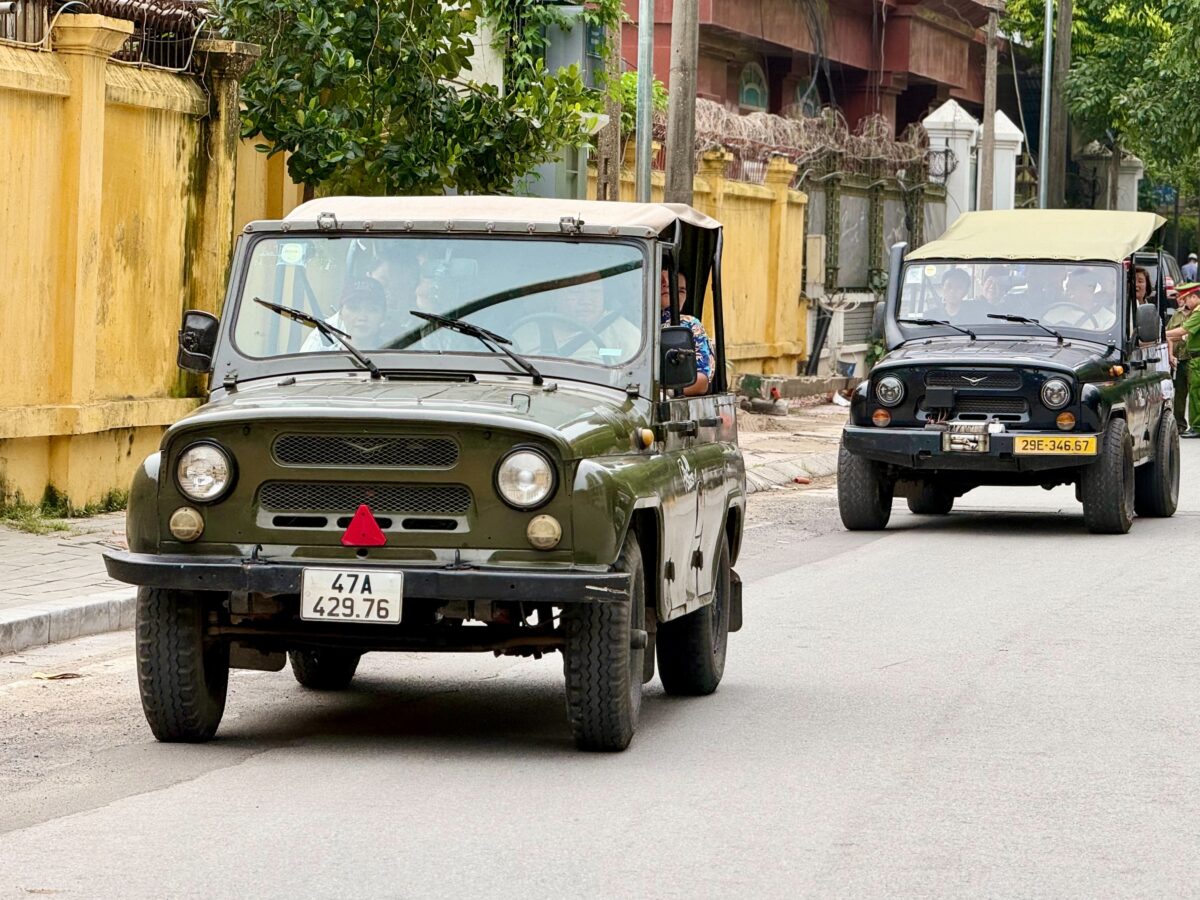
Hanoi Jeep Tour: Hidden Places Most Tourists Never See
Hanoi is famous for its Old Quarter, Hoan Kiem Lake, Hanoi Opera House, Ho Chi Minh Mausoleum, and Train Street. These places deserve a place on almost every first-time visitor’s itinerary, but they represent only one part of the city.
Beyond the familiar landmarks is another Hanoi: narrow residential lanes, riverside farms, quiet lakes, old neighborhoods, small markets, hidden cafés, forgotten wartime reminders, and green spaces surprisingly close to the center.
This is where a Hanoi Jeep Tour becomes particularly interesting.
Instead of following only the most photographed streets, an open-air Jeep can take you beyond the standard sightseeing route and into parts of Hanoi where everyday life continues with far fewer visitors. Current Jeep itineraries combine major landmarks with places such as Long Bien Bridge, Banana Island, West Lake, Huu Tiep Lake, local markets, and residential backstreets.
Hanoi Has a Second Side Most Visitors Miss
Many visitors naturally concentrate their first day around the Old Quarter.
That makes sense. It is convenient, atmospheric, historic, and full of food.
But Hanoi changes dramatically once you leave the center.
The streets become quieter. Houses replace souvenir shops. Small gardens appear beside busy roads. The Red River opens into a much wider landscape. Neighborhood cafés become more residential. And in places such as Banana Island, the city suddenly feels almost rural.
Recent guides to Hanoi’s lesser-known areas highlight places including Ngoc Ha, Banana Island, Phuc Tan, West Lake backstreets, and other neighborhoods away from the standard tourist circuit.
Why a Jeep Is Ideal for Discovering Hidden Hanoi
Hidden places are not always difficult because they are far away.
Sometimes they are difficult because they are difficult to find.
A narrow entrance may lead to a residential neighborhood. A small road beside a bridge may lead toward farmland. A quiet lane beside a lake may hide a historic site.
A Jeep with an experienced guide makes these transitions much easier.
Current Hanoi Jeep routes deliberately combine major landmarks with backstreets, agricultural areas, lakeside neighborhoods, and the Red River landscape.
You get the famous Hanoi first—and then the Hanoi that many visitors never realize exists.
Banana Island: Rural Life in the Middle of Hanoi
Perhaps the best example is Banana Island, or Bãi Giữa.
Located in the Red River beneath Long Bien Bridge, this green area contains banana plantations, vegetable gardens, dirt paths, and small farming communities.
It is an extraordinary contrast.
Above you is one of Hanoi’s most famous historic bridges.
Around you are fields and gardens.
And beyond the river is the modern city.
Recent local guides describe Banana Island as a working agricultural area in the middle of the Red River, with paths running between crops and small farming homes.
It is one of the places where a Hanoi Jeep Tour feels completely different from a conventional city sightseeing trip.
Getting Away From the Main Roads
The journey to hidden Hanoi is part of the experience.
Instead of remaining on the major streets, some Jeep routes turn into narrower roads and backstreets where you can see schools, homes, cafés, workshops, small markets, and ordinary residential life.
One current Jeep itinerary describes taking travelers through backstreets and less-visited areas before reaching the Red River countryside.
This is not about searching for a secret attraction with a sign saying “Hidden Hanoi.”
It is about seeing how people actually live away from the main tourist corridors.
Ngoc Ha: An Old Neighborhood Beside the City Center
Ngoc Ha is another fascinating example.
The neighborhood sits near the Ho Chi Minh Mausoleum complex but feels considerably removed from the formal atmosphere of Ba Dinh.
Its narrow lanes, tube houses, small ponds, gardens, and residential streets reveal an older side of Hanoi.
Recent Hanoi guides identify Ngoc Ha as a historic flower-growing area with tightly packed alleys and traditional residential life.
For visitors who have already photographed Hanoi’s major monuments, a journey through Ngoc Ha can provide a completely different perspective.
Huu Tiep Lake and the B-52 Wreckage
Hidden within Ngoc Ha is Huu Tiep Lake, associated with one of Hanoi’s most unusual wartime remnants.
Part of a B-52 bomber remains in the water.
It is not a grand monument.
There is no enormous visitor center.
Instead, the wreckage sits within an ordinary residential environment, surrounded by houses and daily life.
Current women-led Hanoi Jeep itineraries include Huu Tiep Lake and the B-52 wreckage as part of their route through lesser-known areas.
The contrast between historical memory and everyday neighborhood life makes the stop particularly powerful.
Phuc Tan: Hanoi’s Riverside Character
Phuc Tan offers another perspective.
The riverside neighborhood has a very different atmosphere from the polished streets around the French Quarter.
The area is associated with working-class communities, riverside life, and public art projects.
Recent guides describe Phuc Tan as an under-the-radar riverside area with Red River views and opportunities for street photography.
It is the sort of place where you begin to understand that Hanoi’s identity is not limited to historic buildings and tourist attractions.
Long Bien Bridge From a Different Perspective
Most visitors know Long Bien Bridge as a historic landmark.
But there are several ways to experience it.
You can photograph the bridge from a distance.
You can cross it.
Or you can explore the landscape around it and discover what lies beneath and beyond the structure.
The bridge dates from the French colonial period and remains an important part of Hanoi’s visual identity. Current Jeep routes use it as a gateway between central Hanoi and the Red River landscape.
The most interesting part may be what happens after you leave the bridge behind.
The Red River Countryside
Within a relatively short journey from the center, Hanoi can begin to look surprisingly rural.
Vegetable gardens, fruit trees, banana plantations, flower farms, dirt paths, and small communities appear along the Red River.
Current Jeep itineraries describe reaching the Red River countryside within around 20 minutes from the Old Quarter and continuing along smaller roads through agricultural areas.
For international visitors, this can be one of the most unexpected moments of the entire tour.
You have not left Hanoi.
You have simply discovered another part of it.
Small Farms Hidden Behind the Skyline
One of the most memorable contrasts is seeing modern Hanoi in the distance while farmers work nearby.
High-rise buildings can appear beyond green fields.
Motorbikes travel along narrow paths.
Vegetables grow in plots beside the river.
This juxtaposition is difficult to experience if your itinerary remains entirely inside the Old Quarter.
It is also one reason Banana Island and the Red River area have become popular with travelers searching for less conventional Hanoi experiences.
Quiet Corners Around West Lake
West Lake is well known, but the neighborhoods surrounding it contain many quieter corners that most short-stay visitors never explore.
Instead of simply photographing the lake, a Jeep can take you along smaller roads around the water and into residential areas.
You may see cafés, old villas, small temples, local businesses, and streets where the atmosphere is completely different from the Old Quarter.
Current Jeep itineraries combine West Lake with backstreets and other hidden areas of the city.
Truc Bach Lake
Just beside West Lake is Truc Bach Lake.
It is smaller and generally quieter, creating a different atmosphere from Hanoi’s larger lakeside areas.
The surrounding streets contain restaurants, cafés, residences, and historical sites.
A Jeep route allows travelers to connect Truc Bach with West Lake and other districts without spending much of the tour walking between them.
Hidden Cafés and Old Buildings
Hanoi’s café culture is famous, but the most interesting cafés are not always the ones with the largest signs.
Some are tucked into old apartment buildings, upstairs behind narrow staircases, or inside residential lanes.
Recent guides to Hanoi’s hidden places specifically point to cafés concealed within older buildings and narrow entrances.
A knowledgeable guide can be useful here because these places are often much easier to discover when someone already knows the neighborhood.
Local Markets Away From the Tourist Center
Markets are another way to see a different Hanoi.
Instead of souvenir-focused shopping, neighborhood markets are about vegetables, fruit, meat, seafood, household goods, flowers, and everyday meals.
Some Jeep itineraries include local markets as part of the route, allowing visitors to observe how residents shop and interact.
The experience is less polished than a tourist attraction—and that is precisely the point.
Quieter Streets Around Ba Dinh
Ba Dinh is usually associated with major historical landmarks.
But the surrounding residential streets tell a different story.
Behind the formal government buildings and monuments are ordinary homes, cafés, small businesses, old villas, and narrow lanes.
A Jeep can connect the famous landmarks with these quieter streets, giving travelers a more complete picture of the district.
French Villas Hidden Behind Busy Streets
Hanoi’s French colonial architecture is not limited to the most famous buildings.
Some old villas are scattered through residential neighborhoods where modern Hanoi has grown around them.
From a Jeep, you can see these transitions quickly: a French-era building, a narrow lane, a modern apartment tower, an old house, and a busy market may all exist within the same neighborhood.
That mixture is one of Hanoi’s defining characteristics.
The Railway Neighborhood Beyond the Famous Train Street
Train Street is now one of Hanoi’s most recognizable attractions.
But the railway environment extends beyond the famous café-lined section.
Other railway neighborhoods reveal how the tracks interact with residential life.
This should be explored carefully and only from permitted areas because trains remain active and railway infrastructure is not a tourist playground.
The interesting part is not simply photographing a train.
It is understanding how an active railway has shaped the surrounding neighborhoods.
A Different View of Hanoi’s Street Life
One reason hidden-place Jeep Tours are memorable is that you are not constantly looking for a landmark.
Instead, you begin noticing ordinary things.
A grandmother sitting outside her house.
Children returning from school.
A small repair shop.
A man preparing coffee.
A family eating lunch.
A farmer tending vegetables.
A flower seller preparing the day’s deliveries.
These moments are not attractions.
They are simply Hanoi.
Why the Open-Air Jeep Makes Hidden Streets More Interesting
The open-air design matters.
You are close to the street rather than separated behind a large window.
The pace allows you to see changes in architecture and neighborhood life as you travel.
You can hear the city.
You can smell food.
You can photograph street scenes.
And because the Jeep can access smaller roads, the experience feels less like a conventional sightseeing circuit.
Hidden Hanoi Is Not About Avoiding Every Tourist
It is worth remembering that “hidden” does not mean completely unknown.
Places such as Banana Island, Long Bien Bridge, West Lake, and Ngoc Ha are increasingly appearing in travel guides.
The difference is that they remain considerably less central to the average first-time visitor’s itinerary than the Old Quarter and Hoan Kiem Lake.
The goal is not to find somewhere where no foreign traveler has ever been.
The goal is to see a side of Hanoi that most visitors do not have time to discover.
A Typical Hidden-Gems Jeep Route
A well-designed route might begin in the Old Quarter before moving through the French Quarter and Ba Dinh.
From there, the Jeep can continue toward Long Bien Bridge and the Red River, entering the greener landscape around Banana Island.
The route can then return toward West Lake and Truc Bach Lake before passing through residential neighborhoods and historic sites such as Huu Tiep Lake.
Current Hanoi Jeep Tours use a similar combination of city landmarks, Long Bien Bridge, Banana Island, West Lake, Train Street, Ba Dinh, and Huu Tiep Lake.
The strength of this route is the contrast.
You never spend too long looking at the same type of Hanoi.
How Long Do You Need?
A half-day is enough to discover several hidden areas.
Current Hanoi Jeep experiences commonly run around four to four and a half hours, with morning and afternoon departures available.
A longer itinerary can add more time around the Red River countryside, agricultural areas, markets, or food stops.
If you only have two or three days in Hanoi, a half-day Jeep experience can be an efficient way to reach places that would otherwise require several separate trips.
Morning or Afternoon?
Morning is particularly good for travelers interested in markets, agriculture, and everyday neighborhood activity.
The city is already active, but the heat can be more manageable than later in the day.
Afternoon tours provide softer light for photography and can finish near West Lake or central Hanoi.
If your priority is sunset photography, a late afternoon departure can be especially attractive.
What About Evening Hidden Places?
Some hidden areas are better experienced during daylight.
Banana Island and agricultural paths, for example, should be approached with appropriate caution and generally explored during daylight.
After dark, a Jeep Tour can instead focus on riverside views, illuminated streets, food, cafés, and Hanoi’s nighttime atmosphere.
One current Jeep dining itinerary combines a riverside restaurant with views of Long Bien Bridge and an evening journey through the city.
Add Vietnamese Food to the Experience
Discovering hidden Hanoi becomes even more interesting when food is included.
Instead of eating only at famous restaurants, a guide can introduce you to dishes and drinks associated with everyday Hanoi.
Depending on the itinerary, this can include Vietnamese meals, street food, coffee, beer, desserts, or other specialties.
Current Hanoi Jeep itineraries include food and drinks as part of their sightseeing experiences.
Why Food and Hidden Neighborhoods Work Together
Food tells you something about a neighborhood.
A busy market explains what people buy.
A small noodle shop shows what residents eat.
A roadside coffee stall reveals how people socialize.
A family-run restaurant introduces you to a different side of Vietnamese hospitality.
This is why combining hidden streets with food can be more meaningful than treating sightseeing and dining as completely separate activities.
Is a Hidden-Gems Jeep Tour Suitable for Families?
Yes, particularly for families that want to see more of Hanoi without walking for several hours.
Children may also find Banana Island, the open-air Jeep, farms, bridges, markets, and unusual neighborhoods more engaging than visiting a long sequence of indoor attractions.
The route can also be adapted through a private experience when families need a different pace.
Is It Good for Couples?
A private Jeep is an excellent format for couples who want a more unusual Hanoi experience.
Instead of spending the entire day around the same central streets, you can explore the river, countryside, lakes, historic neighborhoods, and food stops together.
It also creates more opportunities for photography.
Is It Suitable for Older Travelers?
The Jeep reduces the amount of walking required between distant parts of the city.
You can still get out and explore selected areas, but you do not have to walk several kilometers to connect them.
For travelers who want cultural discovery without an exhausting walking itinerary, this can be a major advantage.
Why a Women-Led Jeep Tour Adds Another Perspective
A women-led tour can bring a more personal dimension to these neighborhoods.
Rather than simply identifying landmarks, a knowledgeable guide can explain family life, food traditions, neighborhood history, changes in Hanoi, and the stories behind places that visitors might otherwise pass without noticing.
Current Hanoi Jeep Tours position their experiences as women-led and include major landmarks alongside hidden neighborhoods, Banana Island, West Lake, Huu Tiep Lake, and culinary experiences.
The tours are not limited to women travelers. Couples, families, solo travelers, and mixed groups can all enjoy the experience.
What Makes a Hidden-Places Tour Different From a Standard City Tour?
A standard city tour often asks:
What are the most important landmarks in Hanoi?
A hidden-gems Jeep Tour asks a different question:
What does Hanoi look like when you move beyond the landmarks?
That difference changes the itinerary.
Instead of simply collecting famous sights, you begin looking at neighborhoods, landscapes, markets, farms, old homes, riverside communities, and everyday routines.
Should You Still Visit the Famous Attractions?
Definitely.
Hidden places should complement the classics, not replace them.
The best Hanoi itinerary can include Hoan Kiem Lake, the Old Quarter, Hanoi Opera House, and Ho Chi Minh Mausoleum while also making time for Long Bien Bridge, Banana Island, West Lake, Ngoc Ha, and other less-visited areas.
The contrast makes both experiences stronger.
The Best Combination for First-Time Visitors
For first-time visitors, a good strategy is to spend your first few hours seeing Hanoi’s major landmarks and hidden areas by Jeep.
Then return to the Old Quarter independently.
You will already understand the city’s geography and can decide which neighborhoods deserve more time.
Perhaps you will want to revisit West Lake.
Maybe Banana Island will be your favorite discovery.
Perhaps you will want to spend an evening around the Old Quarter’s food streets.
The Jeep gives you the overview.
You choose where to go deeper.
Responsible Exploration of Hidden Hanoi
Hidden neighborhoods are residential areas, not theme parks.
Visitors should respect residents, avoid entering private property, ask before photographing people closely, stay on appropriate paths, and follow their guide’s instructions.
This is particularly important around agricultural areas and active railway infrastructure.
Banana Island, for example, is a working farm area, and visitors are advised to stay on paths and avoid damaging crops.
The best hidden-place experience leaves the neighborhood exactly as you found it.
The Most Valuable Part Is Often the Unexpected Moment
You may remember Long Bien Bridge.
You may photograph Banana Island.
You may enjoy a coffee beside West Lake.
But sometimes the moment you remember most is something that was never on the itinerary.
A farmer waving from a field.
A narrow lane filled with flowers.
A tiny café hidden behind an old building.
A family preparing lunch.
A quiet view of the river between two houses.
That is what exploring beyond the tourist route can provide.
Final Thoughts
A Hanoi Jeep Tour: Hidden Places Most Tourists Never See is not simply a sightseeing trip with a few secret stops added to the route.
It is a different way of understanding Hanoi.
You can begin among the historic streets of the Old Quarter, pass through the French Quarter and Ba Dinh, cross or approach Long Bien Bridge, descend toward the Red River landscape, explore Banana Island, travel around West Lake and Truc Bach Lake, discover residential neighborhoods, see the B-52 wreckage at Huu Tiep Lake, and finish with Vietnamese food or coffee. Current Jeep routes in Hanoi specifically combine many of these lesser-known environments with the city’s major landmarks.
The biggest surprise is how quickly Hanoi changes.
One moment you are surrounded by traffic and centuries-old streets.
A short time later, you can be looking across a green field toward the city skyline.
That contrast is the hidden Hanoi—and it is one of the best reasons to explore the capital by Jeep.
Hanoi Jeep Tours – Led by Women
Address: 91 Tho Nhuom Street, Hoan Kiem District, Hanoi, Vietnam
WhatsApp: +84 982 416 518 / +84 981 090 989
Email: toursjeephanoi@gmail.com
Website: Hanoi Jeep Tours – Official Website